

Creativity is a huge part of my life, and not something I talk about nearly enough considering the space it takes up and the weight it carries.
What I’ve come to understand is this: creativity is not a gift. It’s not something you’re born with or without. It’s a practice.
And like any practice, it becomes easier—more natural, more expansive—the more you return to it.
For some reason, creativity is one of the only areas where we insist on believing otherwise. We tend to treat it like an inherent trait, a fixed identity: creative or not creative. Most of us quietly decide we fall into the latter category—and then we never challenge it.
But we don’t think this way about anything else.
We don’t believe the world’s greatest athletes were simply born knowing how to swing a golf club or return a serve. We understand the years behind it—the repetition, the discipline, the devotion. We don’t assume musicians arrived in this world as virtuosos, or that experts in any field were handed mastery at birth. We recognize the practice.
So why is creativity different? Why do we write ourselves off as uncreative when we’ve spent little to no time actually practicing it?
My own creative practice didn’t begin as a pursuit of art. It began as a response to absence. When I stopped drinking, I expected to feel better—and I did. It was one of the best decisions I’ve ever made. But what I didn’t expect was the quiet that followed. The empty space. The realization that without it, I wasn’t nearly as fulfilled—or as interesting—as I had believed.
There was a gap where something had been, and I didn’t know how to fill it. I had time. I had clarity. I had a restless, searching energy that needed somewhere to go.
So I started trying things.
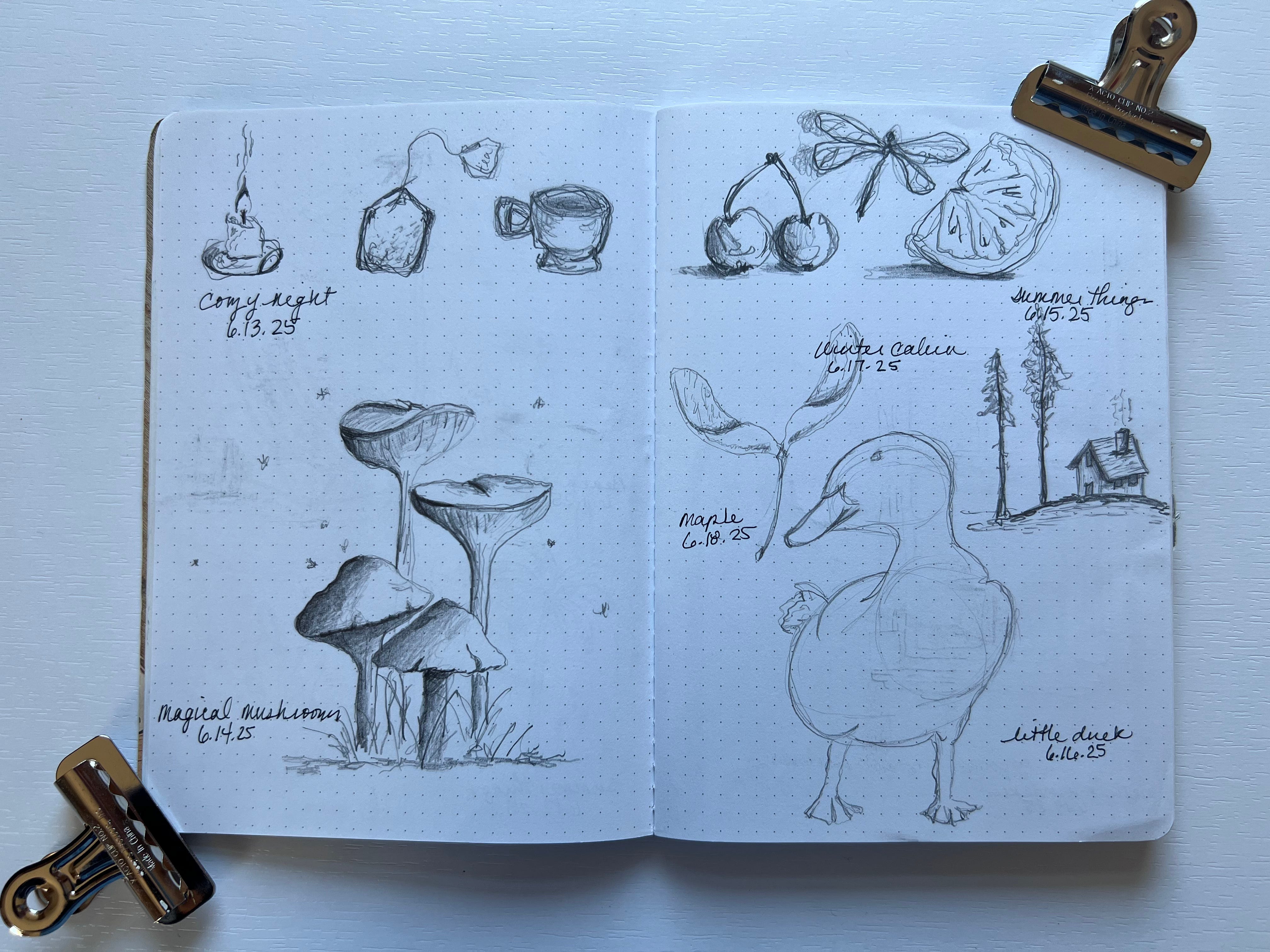
I sketched objects around my house—a pitcher, a lemon juicer, crumpled tissue. I wrote until my hands cramped—about my feelings, my experiences, perfumes, dreams, fantasies. I bought watercolor paints and made things that were, objectively, not good. I kept going anyway.
I watched tutorials. I practiced. I made more bad things. And then, slowly, they became less bad.
Somewhere along the way, something shifted. I started looking forward to it. Not because I was good, but because of how it felt: time would dissolve. My mind would quiet. I would disappear into the act of making.
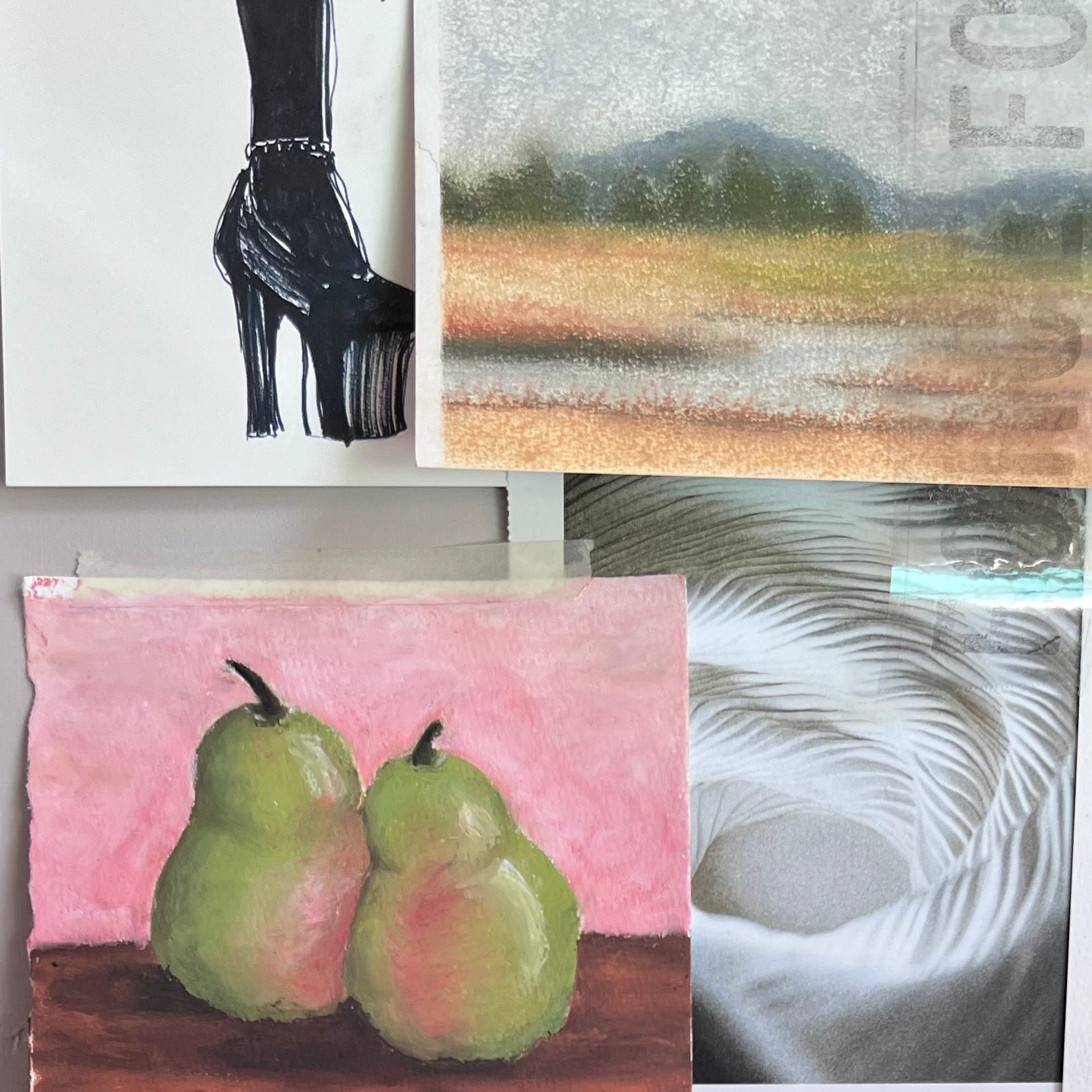
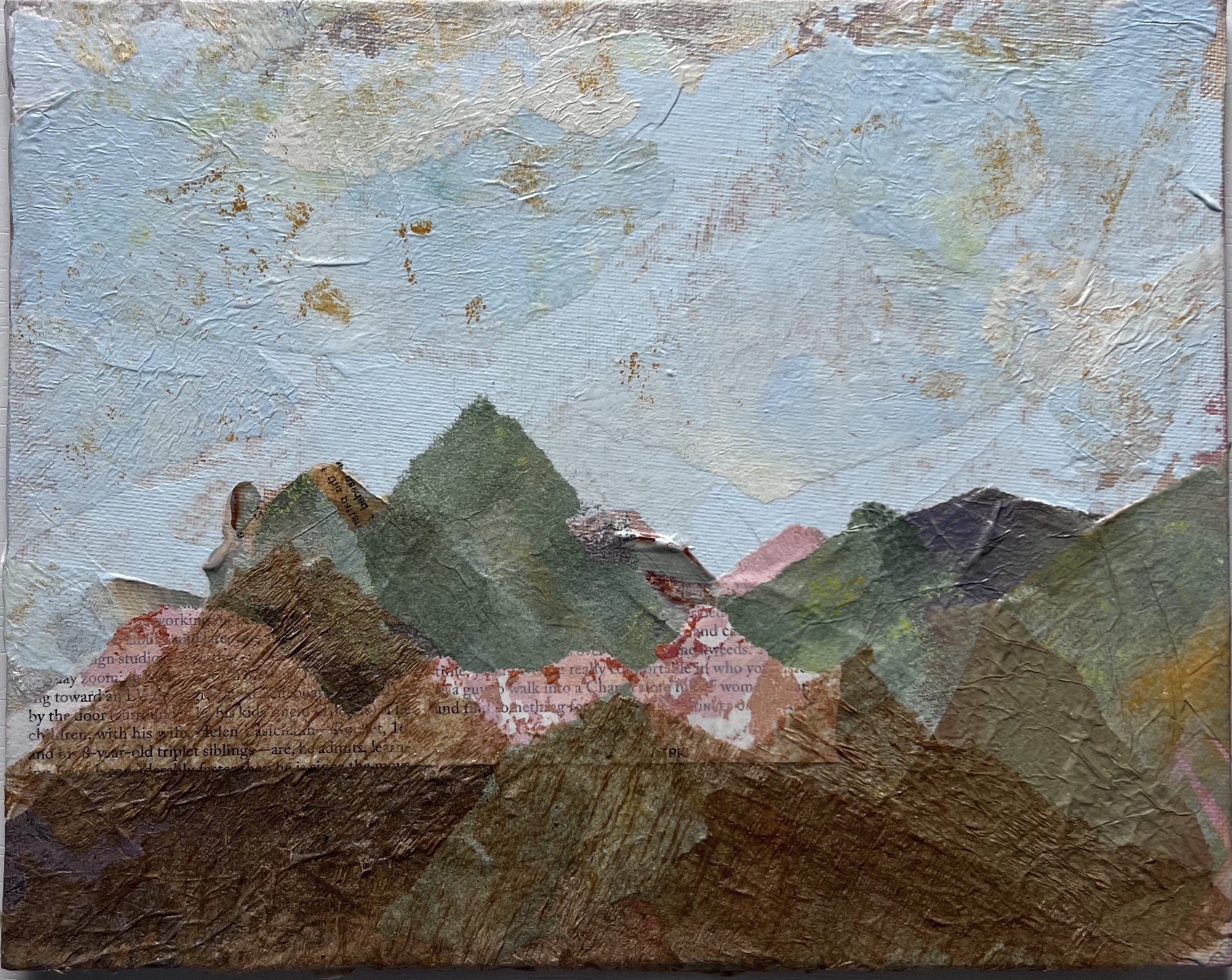
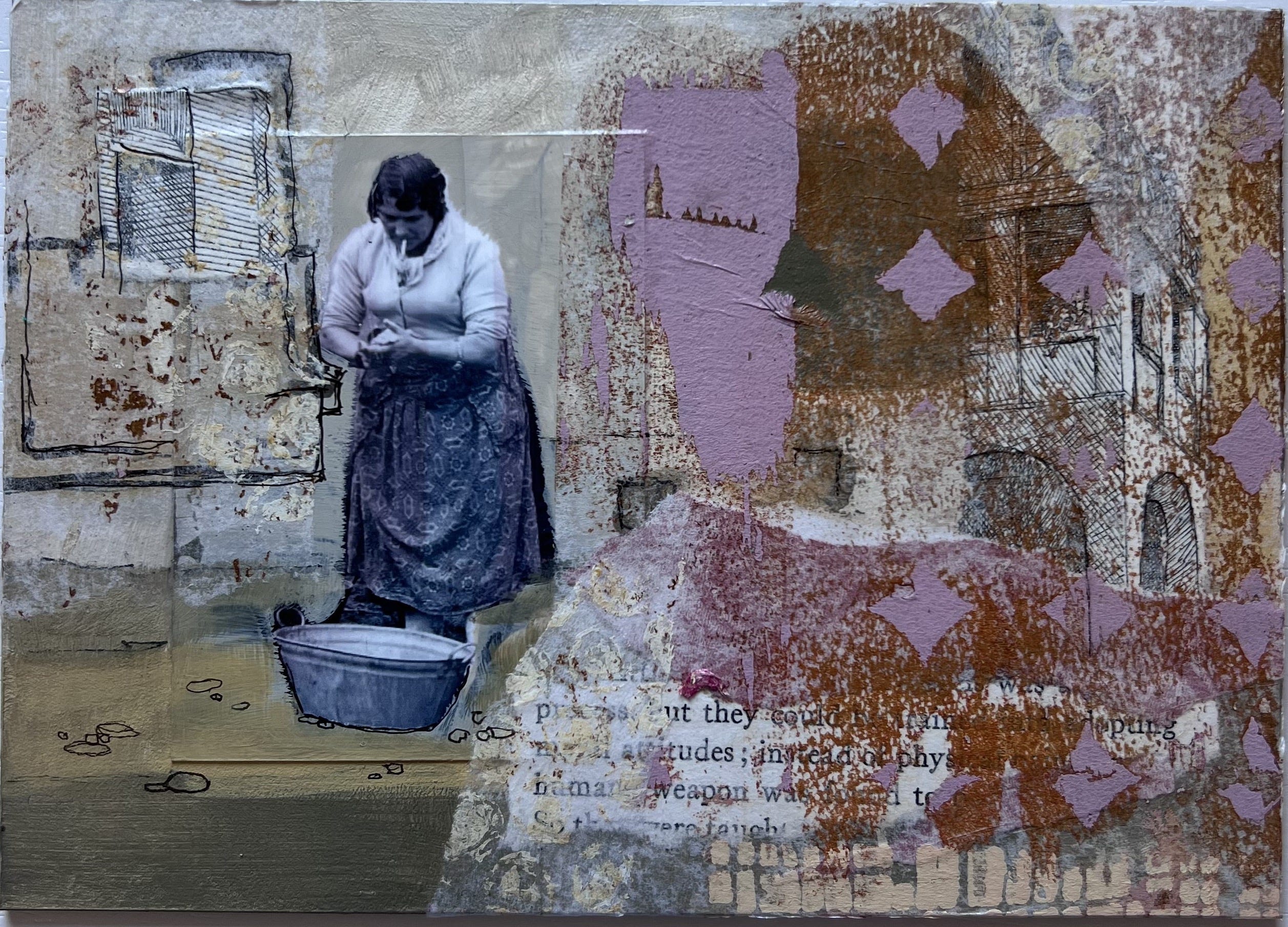
After a few months, I moved on to pastels. Then acrylics. Then oils. I started writing this Substack. I kept sketching. I started collaging. Some pieces took twenty minutes. Others took days. I began a commonplace journal—playing with layout, ideas, color, texture. Fountain pens, stickers, fragments of thought.
It wasn’t linear, and it wasn’t perfect. It was a practice.
And over time, it expanded beyond art.
I began to see creativity everywhere—in how I got dressed, in how I crafted a meal, in the act of baking bread or making soap. In the way I rearranged a corner of my home until it felt just right.
Some days, ideas come easily. Other days, I have to go looking for them. Some things I make are not good. Some, I think, are. None of it really matters.


What matters is that I show up.
Because of how it feels to be inside the act of creating. Because it makes my life feel more beautiful. Because it gives shape to my days—something like purpose, something like meaning.
And because I’ve come to understand that expressing what lives inside of me…
isn’t something that happens by accident.
It’s something I practice.


Yours, in practice . . .
-Kelley
Thank you for sharing.
Excellent point on creativity.💯